OASIS Devices launches OASIS 1, a smart ring you type with by whispering
- Miami-based startup OASIS Devices launched and opened preorders on June 30, 2026 for OASIS 1, a titanium smart ring priced at $289, with the first limited batch shipping around Christmas 2026.
- The core feature is subvocal input: bring the ring close to your mouth, whisper almost inaudibly, and its built-in noise-canceling mic feeds Wispr Flow's dictation tech to turn speech into text in real time.
- The ring also packs a capacitive trackpad (with haptic feedback) plus swipe and motion gestures — used for fixing errors, navigating, and scrolling, so voice, touch, and gesture input all live on one ring.
- Specs: titanium build, up to 16 hours of battery on the ring itself, about 9 days with the charging case per the company's own figures, works with iPhone, Mac, and Vision Pro, with music support for Spotify and Apple Music.
- The company already shipped a first-generation, touch-only ring in December 2025 — OASIS 1 is the next-gen version that adds a microphone and leads with subvocal dictation. Founder Ricky Rosa is a solo founder with a team spread across Miami, Denver, China, and Abu Dhabi.
A small Miami company chasing what comes after the keyboard
On June 30, 2026, Miami startup OASIS Devices launched and opened preorders for OASIS 1, a titanium smart ring built around bringing the ring close to your mouth and whispering almost silently to turn speech into text.
It folds private voice, touch, and gesture input into a single titanium ring. The website's tagline is "Speak private, stay present" — talk to your device privately without breaking from whatever you're doing.
Founder and CEO Ricky Rosa's read on the situation: keyboards, mice, touchscreens — all of it was designed for "computers that live inside laptops and phones." But AI is now moving into glasses, robots (he name-checked Tesla's Optimus), and self-driving cars — none of which have a keyboard or touchscreen built in. He boils it down to one line: computing is now everywhere, but human intent is still trapped behind a screen. OASIS positions itself as "the first step after the keyboard."
What it actually looks like: this isn't a health ring
Built in titanium, with a matching charging case. Visually it resembles rings like Oura's — but the positioning is different. Those rings track sleep, heart rate, and body temperature; OASIS 1 is built to be operated, not monitored.
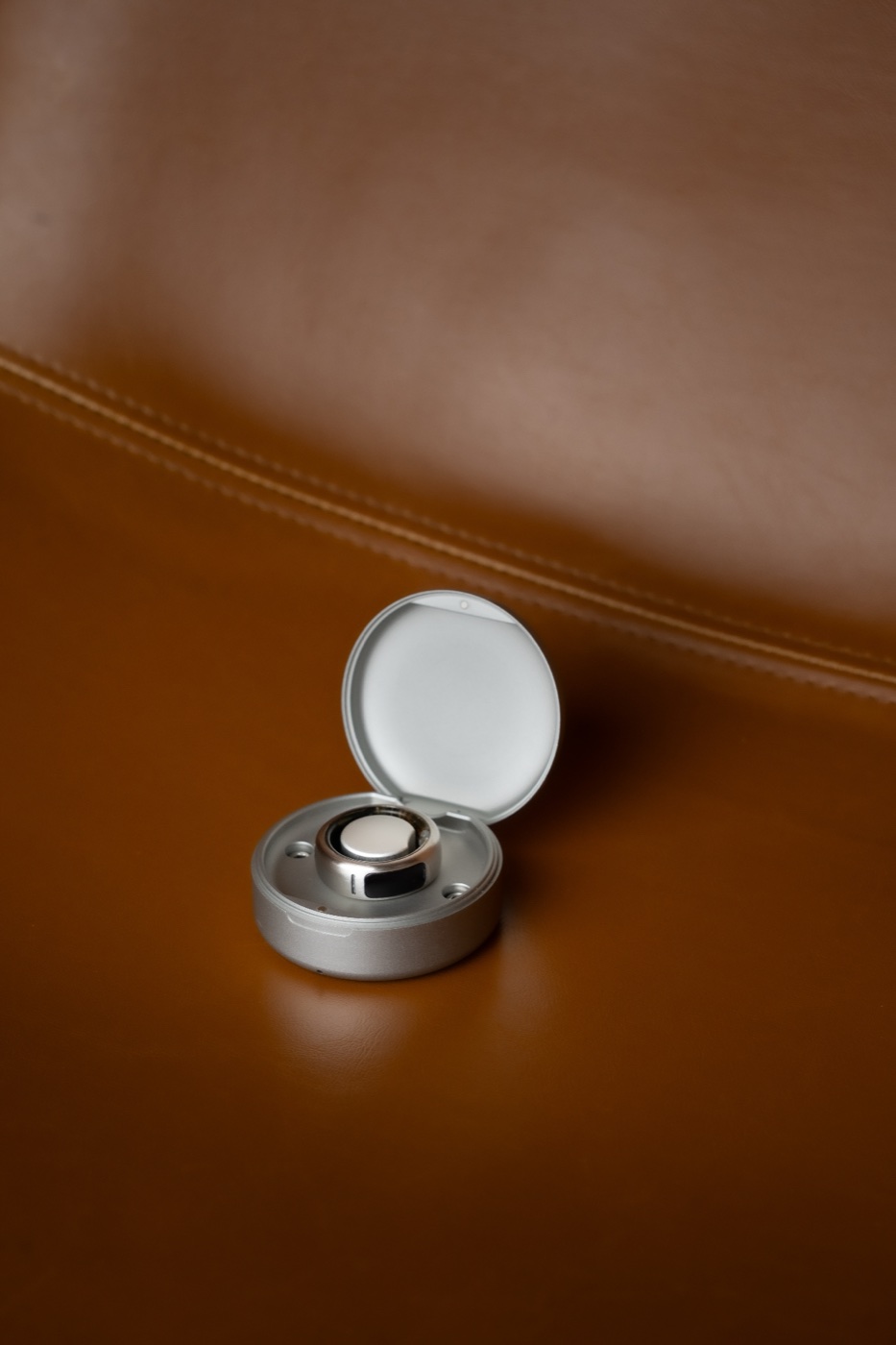
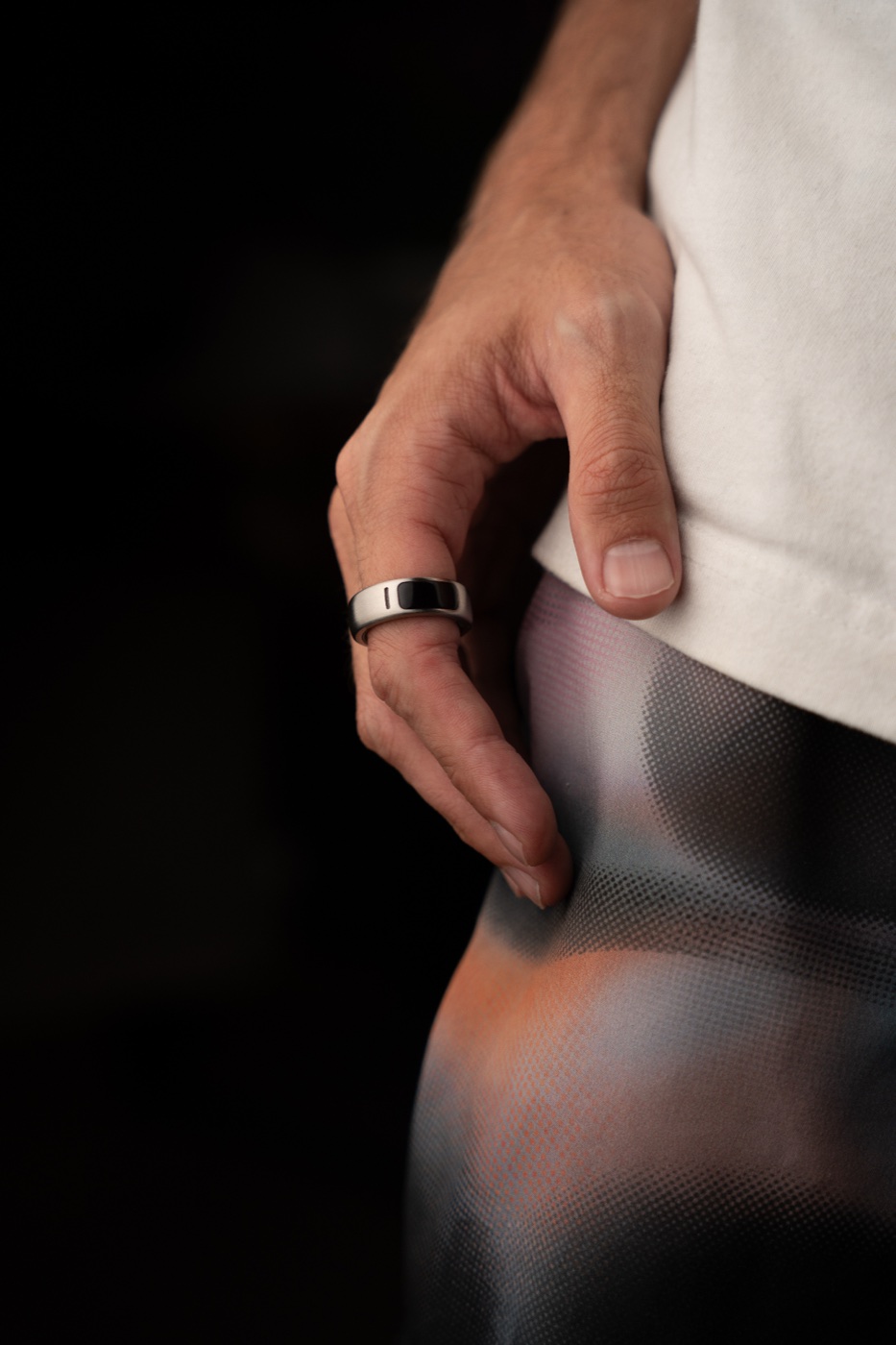
Founder Rosa draws a clear line: "We're not a health ring — this is a ring for interaction." It's not going after the health tracker on your wrist; it's going after your keyboard and mouse.
Why voice assistants always feel awkward
Voice input is actually fast — faster than typing. But it has an old problem: it makes you talk out loud. In an open office, on the subway, in a meeting room, saying a command loud enough for a phone or earbuds to hear means everyone around you hears it too — and plenty of people just give up on voice because of that.
That's exactly the gap OASIS is designed to close. Since the ring sits on your hand, it's naturally close to your mouth — close enough that the mic can pick up a whisper, quiet enough that only that nearby mic catches it. That keeps the speed of voice input while getting back the privacy of typing.
You have to speak at normal volume, the mic is far from your mouth, and anyone nearby in public hears you — awkward for private content or during meetings.
Bring the ring to your mouth and whisper at breath-level volume — only the mic right up against your face picks it up. In the official demo, someone quietly "writes" into a document without disturbing anyone nearby.
Whisper (or subvocal) input isn't mind-reading with zero sound — it's dropping your speaking volume down to whisper level. Think of leaning in to tell someone next to you a secret during a meeting — except this time you're whispering to the microphone inside the ring.
How three input methods combine into one complete typing session
Voice alone can't finish the job of typing, because AI dictation inevitably makes mistakes you need to fix on the spot. OASIS's trick: don't rely on voice alone — pair dictation with a familiar "pointing device" so speaking, correcting, and navigating can all happen on one ring.
Whispered speech is picked up by the noise-canceling mic and fed into Wispr Flow's AI dictation, which turns it into text in real time inside any app. When it gets something wrong, you use the haptic capacitive trackpad — a fingertip movement repositions the cursor and fixes the error. Swipe and motion gestures handle navigation and scrolling on top of that. One complete input cycle: voice does the "writing," touch does the "fixing," gestures do the "browsing."
Each input method has its own job
Click the tabs below to see what voice, touch, and gesture each handle.
Whisper Voice → Text
Bring it close and whisper; the noise-canceling mic picks it up, Wispr Flow converts it to text inside the app. Handles the bulk of "typing" — fast and private.
Capacitive Trackpad (With Haptic Feedback)
The trackpad is tiny — vibration feedback lets your finger feel whether it tapped or where it swiped, without needing to look down. Like the slight buzz when you tap a button on your phone, except here the feedback tracks your fingertip's path across a ring-sized trackpad. It's specifically for fixing dictation errors on the spot, moving the cursor, and navigating the interface.
Swipe and Motion Gestures
The website also shows swipe and motion gestures, used for scrolling pages, making selections, and controlling the device — rounding out the input options beyond voice and touch.
Who is Wispr Flow, and why is it critical here
Wispr Flow is an AI company specializing in voice dictation — it's what turns the mic's recorded audio into text in real time. OASIS didn't build this recognition tech itself; it's bundled in as a "featured integration." Whether whisper input actually works hinges heavily on that dictation engine's accuracy and latency. Rosa says the next step is deepening the Wispr Flow integration and connecting to more software.
Rosa emphasizes this isn't about forcing you to change how you work overnight — it's meant as a bridge between "today's keyboard" and "AI that understands intent" tomorrow.
How long does it last, and what does it work with
Below are the hard specs straight from the website, to help you judge whether this works with your own devices. Battery figures are the company's own stated numbers.
| Item | Spec |
|---|---|
| Material | Titanium |
| Microphone | Noise-canceling mic |
| Trackpad | Capacitive, with haptic feedback |
| Compatible devices | iPhone, Mac, Vision Pro; designed to switch between multiple devices |
| Music | Spotify, Apple Music |
| Featured integration | Wispr Flow (voice dictation platform) |
Not their first ring, and not a one-person show
OASIS 1 isn't a slideware concept. The company already shipped its first ring (touch-only) in December 2025 — this preorder, OASIS 1, builds on that with an added microphone and a lead feature of whisper dictation.
An unusual fundraising story
An early investor relationship traces back to a Texas Instruments (TI) technical forum on wireless charging, which led to a group of Australian doctors who'd been tinkering with their own smart ring project. As Rosa puts it: "It's interesting meeting people online."
What's not in hand yet, and how much to trust it
Let's put it plainly: what's confirmed is the product form, the stated specs, and the company's shipping track record. What's not confirmed is what the real device actually feels like to use. These uncertainties belong to the product itself, not to this write-up.
This is a preorder, not a shipped product. $289 buys an order placed today; the product itself doesn't ship until around Christmas 2026, and the first batch is limited. A preorder hasn't been validated by the market yet.
The official demos are marketing videos. The swipe, whisper, motion, and text-editing clips are official demos shot by the company — actual feel, recognition accuracy, and latency won't be known until people get their hands on a real unit.
Social perception in public is make-or-break. Digital Trends put it bluntly: whispering into a ring in a crowded office might still draw a few odd looks. Whether whisper input can feel as natural and private as typing is the crux of whether this product works.
Small team, solo founder. This is a very small company — hardware production at scale, supply, and after-sales support are all still untested at volume.
After the keyboard, how will people actually talk to machines
Put this launch back into the bigger industry question it's answering: AI is moving out of screens and into glasses, robots, and cars — but the way humans give these AIs instructions is still stuck with the keyboard and mouse.
Rosa describes OASIS's goal as building "an operating system for intention," making touch and voice the primary way humans express what they want to machines. A ring worn on your hand that can both whisper privately and track fine touch input is one concrete attempt at answering "what does human-machine interaction look like after the keyboard." It may not be the final answer, but it's pointed straight at a question the industry keeps circling back to.
Computing is now everywhere, but human intent is still trapped behind a screen. Ricky Rosa, Founder of OASIS Devices, in an interview with Refresh Miami