OpenAI officially launches GPT-5.6: general intelligence score closes in on Claude Fable 5, cost cut in half, ChatGPT and Codex merge
- OpenAI officially launches the GPT-5.6 family of three tiers: flagship Sol, balanced Terra, and value-priced Luna, rolling out today across ChatGPT, Codex, and the API, fully deployed worldwide within 24 hours.
- Same day, ChatGPT Work also launched (a Codex-equipped agent that breaks tasks into steps and delivers finished output on its own, positioned against Claude Cowork), and the Codex app folds into the new ChatGPT desktop app — both powered by GPT-5.6.
- New ultra mode, which by default coordinates 4 agents working in parallel on complex tasks; on the API side, developers can build a similar experience themselves via the Responses multi-agent beta.
- Official benchmarks: Sol hits a record 80 on the Artificial Analysis Coding Agent Index. On the general intelligence index, it closes in on Claude Fable 5 — just 1 point behind — at roughly half the cost and 61% less time.
- Cybersecurity scores jumped sharply (ExploitBench rose from 47.9% to 73.5%); OpenAI says it still hasn't crossed the "Critical" risk threshold, and safeguard blocking strength increased roughly 10x.
- Pricing: Sol costs $5 input / $30 output per million tokens, Terra $2.5/$15, Luna $1/$6, plus a new, more stable prompt caching mechanism.
OpenAI ships another new model — and this time it's three at once
OpenAI officially launched the GPT-5.6 model family today (2026-07-09), comprising flagship Sol, balanced Terra, and value-priced Luna, alongside a new ultra mode that coordinates multiple agents working in parallel.
And it's not just a model release. The same day, OpenAI also launched ChatGPT Work and folded Codex into ChatGPT, with GPT-5.6 as the engine driving it. That product-line shift is just as significant as the model itself — more on that in Section 9 below.
Rollout: starting today across ChatGPT, Codex, and the OpenAI API simultaneously, rolling out in stages worldwide, complete within 24 hours. Let's walk through what "cheaper and faster" actually means, section by section, based on OpenAI's own test results.
Same intelligence, so why is it cheaper and faster too
Judging whether a model is good isn't just about "how high the score is" — it's also about "how much money and time it took to get that score." GPT-5.6's pitch is squarely on the second half of that sentence: cut the time and cost on the same batch of tasks, while the score barely moves.
OpenAI illustrates this with two composite benchmarks. One is Agents' Last Exam (covering long-horizon agentic workflows across 55 professional domains), where Sol set a new record of 53.6, 13.1 points above Claude Fable 5; even at medium reasoning effort alone, it still beats Fable 5 by 11.4 points, at roughly a quarter of the cost. The smaller models save even more: Terra and Luna beat Fable 5 at roughly one-sixteenth the cost. The other is the Artificial Analysis Intelligence Index (which blends agentic ability, coding, scientific reasoning, and general capability into one score). At the max setting, Sol is only 1 point below Fable 5, but finishes tasks using 61% less time and roughly half the cost.
Ultra mode: 4 AIs split the work, then merge results
GPT-5.6 lets you dial how much time and compute it's willing to spend thinking, from low, medium, high, xhigh, up through max. Above max is a new tier called ultra: it's not "one model thinking longer" — by default it calls in 4 agents, splits the task and runs it in parallel, then merges the results.
OpenAI compared "1 agent" vs. "4 agents" across three benchmarks: BrowseComp (web browsing tasks), SEC-Bench Pro (security proof-of-concept), and Terminal-Bench 2.1 (command-line tasks). The takeaway: adding a few parallel agents gets you a higher score in less time. On BrowseComp, for example, a single agent needs a full 8 minutes to reach 90.84%, while 4 agents hit 92.18% in just 6.58 minutes.
Toggle the agent count below to see how the score/time curve shifts toward the top-left (further left = faster, further up = more accurate):
Single-agent baseline: from low to max, the score climbs steadily from 69.04% to 90.84%, but the top score takes a full 7.99 minutes to reach. The curve sits mostly bottom-right.
Ultra default tier: 4 agents in parallel shift the whole curve up and to the left at the same reasoning setting. At max, it reaches 92.18% in 6.58 minutes — faster and more accurate than the single agent.
16 agents: pushes further toward the top-left. Low hits 86.41% in under a minute, high reaches 92.18% in 2.79 minutes, topping out near 93.4%.
On the developer side, the API now offers a multi-agent beta: within a single request, GPT-5.6 can run multiple parallel sub-agents and merge their results, letting you build your own ultra-style experience.
"GPT-5.6 is one of the strongest models we've tested on CursorBench, with solid results in early evaluation. It's a step forward for developers on consistency, intelligence, and overall efficiency."Oskar Schulz, President, Cursor
How coding got stronger: record scores, and cheaper too
Sol is OpenAI's strongest coding model to date. On the Artificial Analysis Coding Agent Index, it hits 80 at max — a new record — 2.8 points above Claude Fable 5, while using less than half the output tokens, less than half the time, and roughly a third less cost. The whole family benefits: Terra edges past Fable 5, Luna beats Opus 4.8, each using roughly a third of the time, about half the output tokens, and roughly a quarter of the cost.
Where the savings come from: letting the model write a small program to handle tool calls
For coding and tool-heavy work, the old approach was: every time the model called a tool, the entire tool response got stuffed back into the conversation for the model to re-read and decide what to do next. More round trips meant more tokens burned. GPT-5.6 introduces Programmatic Tool Calling: the model writes a small program that coordinates multiple tools in memory, filters out useless intermediate data, and only brings the conclusion back to itself at key checkpoints.
It's like sending an intern off with a checklist to run all the errands themselves, only checking back in at key moments — instead of calling in for approval after every single step. Fewer round trips means fewer tokens burned and fewer detours.
A side benefit: because intermediate data is processed entirely in memory and never persisted, Programmatic Tool Calling naturally satisfies Zero Data Retention (ZDR) compliance requirements — a good fit for tool-heavy workflows in data-sensitive industries like healthcare and finance.
It can look at its own rendered output, spot problems, and fix them
GPT-5.6 has one notable change in interface design: give it a high-level direction and it produces a good-looking, usable, functional interface. More importantly, thanks to stronger computer-operating ability, it can look at what it actually renders instead of just spitting out code — which lets it catch visual and functional flaws, fix them, and hand back the result.
OpenAI's first showcase example: from a single high-level instruction, GPT-5.6 built Saltwind, a sailboat racing mini-game — a fully playable 3D web game. Below is the game itself, embedded live — click "START REGATTA" to sail it yourself (A/D to steer, W/S to trim sail, Space to boost):
Another example turns a single sentence into an interactive explainer page. In ChatGPT Work, OpenAI gave three examples: an interactive spirograph, wave interference, and a GPT tokenizer visualization — all web pages that recalculate in real time as you drag a slider. Take the spirograph first: the user simply said "make an interactive spirograph that explains how it works," the model thought for 1 minute 12 seconds, and produced the page below directly (recorded run):
x = (R − r)·cos(t) + d·cos(((R − r)/r)·t)
y = (R − r)·sin(t) − d·sin(((R − r)/r)·t)
Copying a PowerPoint template — who copies it better
GPT-5.6 can infer an entire design spec from a reference document — layout, typography, spacing, color, recurring content patterns, including rules buried in the Slide Master — and apply those conventions consistently to new content. OpenAI ran a comparison of "update the numbers to match the reference file": on the same reference template, GPT-5.5 missed a key element hidden in the master slide, while GPT-5.6 followed the reference structure more completely.
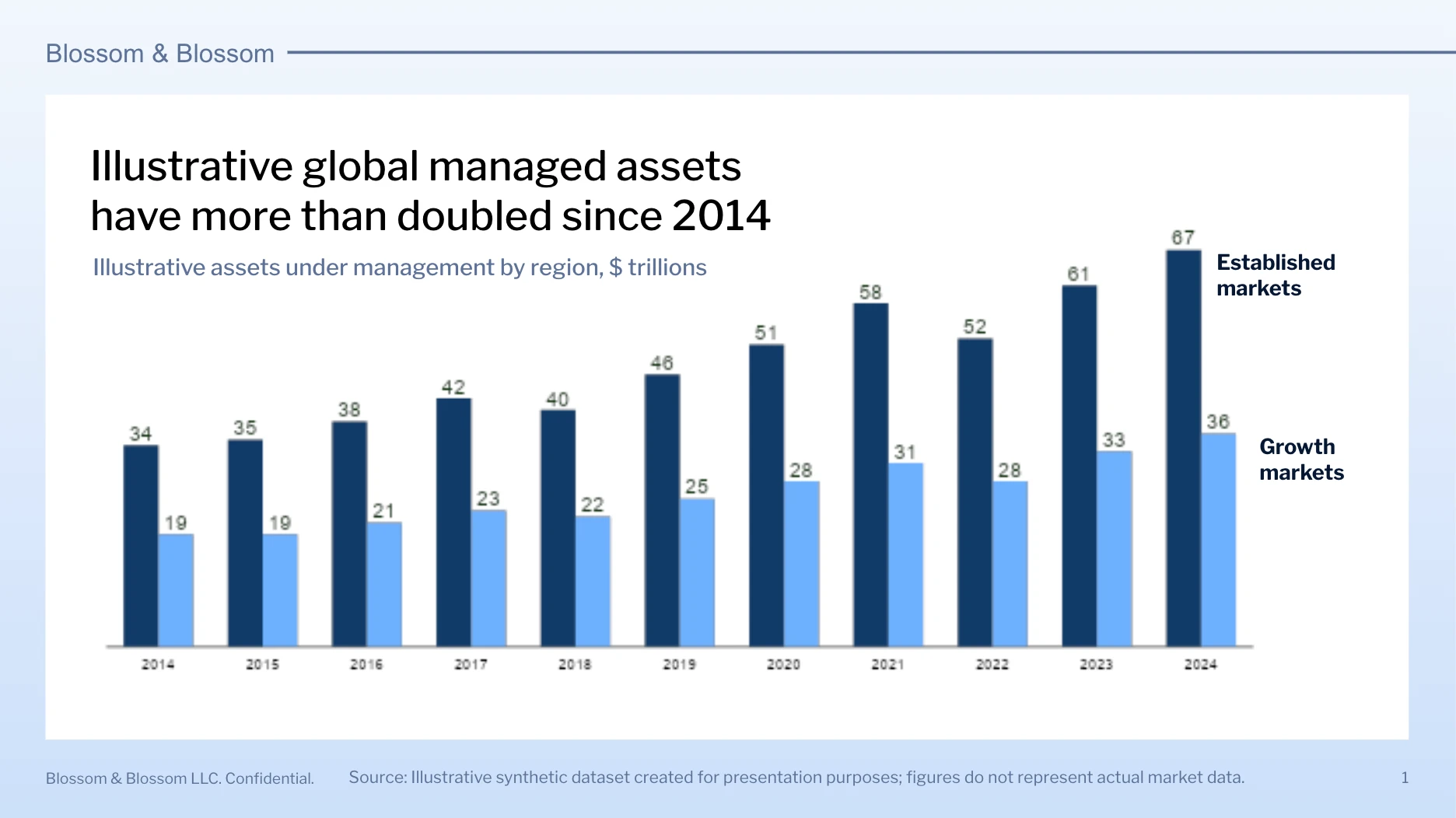
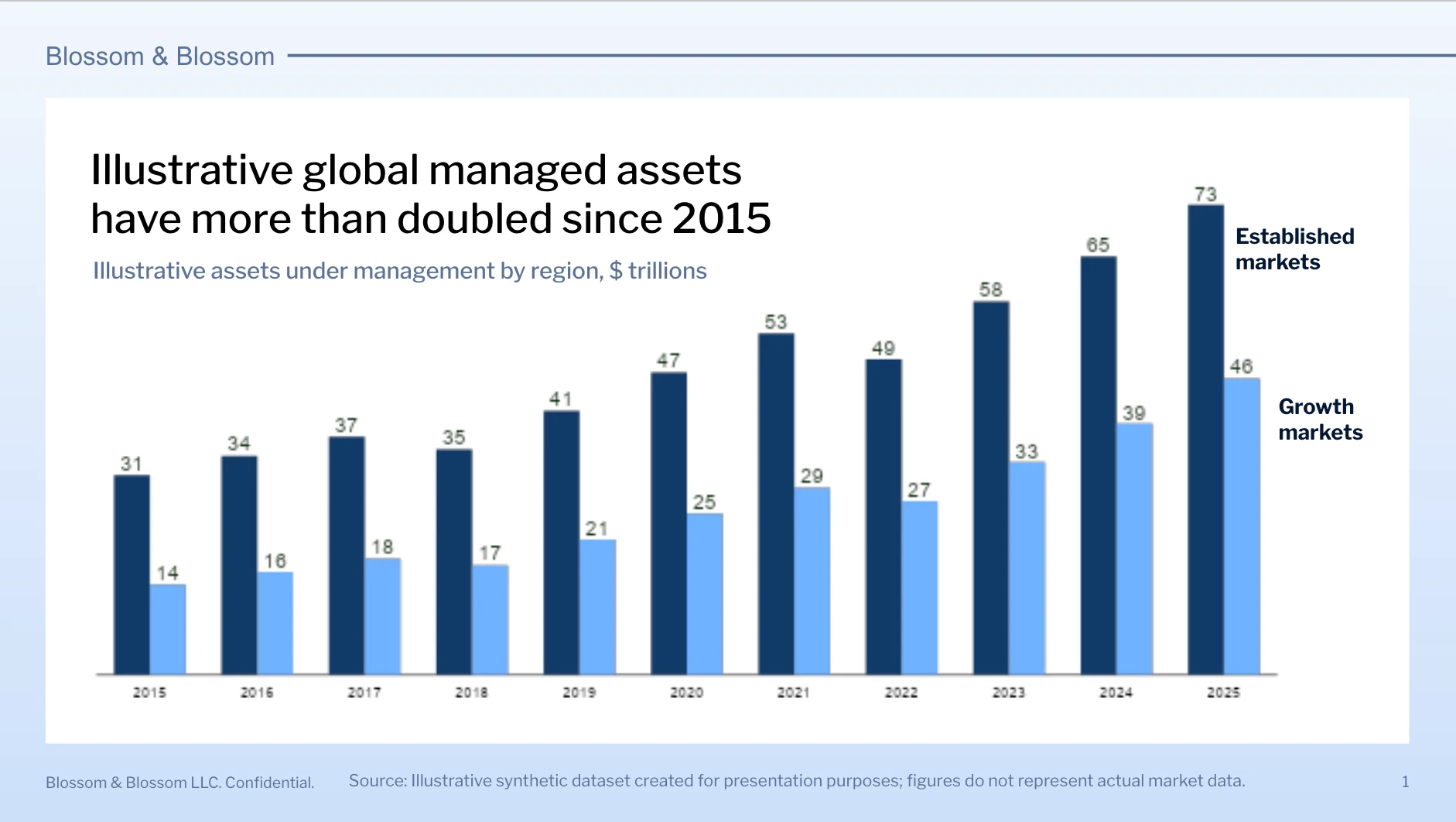
The same improvement shows up in documents and spreadsheets: it more faithfully follows complex reference formatting, handles formulas and financial models more precisely, and applies typography, spacing, hierarchy, and page layout more competently. That has a direct impact on knowledge work that requires repeatedly reproducing a format.
"GPT-5.6 is highly effective at the long, complex processes behind building production-grade applications. As one of the models Lovable now uses, it's helping users complete the same tasks with roughly 25% fewer steps and 35% to 48% fewer tool calls, while improving project success rates and cutting stuck runs by 15%."Fabian Hedin, co-founder, Lovable
Cybersecurity ability jumped a level — how OpenAI is guarding it
GPT-5.6 is OpenAI's strongest cybersecurity model yet, and it uses fewer tokens doing it. The jump across three benchmarks is stark: ExploitBench (measuring progress from touching vulnerable code to achieving arbitrary code execution) rose from GPT-5.5's 47.9% to 73.5%; ExploitGym (turning real vulnerabilities into working exploits) rose from 15.1% to 24.9% within a two-hour cap, reaching 33.7% when relaxed to six hours; SEC-Bench Pro (proof-of-concept generation on complex software) rose from 45.8% to 71.2%.
OpenAI's own safety assessment of this capability: GPT-5.6 is stronger than earlier models in both biological and cybersecurity risk, but neither area has crossed the "Critical" risk threshold. On cybersecurity specifically, OpenAI's testing finds it's better at "finding and fixing vulnerabilities" than at reliably launching an end-to-end autonomous attack on a hardened target — which leaves defenders a window to shore up their systems first. Defensive tasks (security code review, patching, threat modeling, blue-team exercises) are where it's meant to be used.
On the guardrail side, GPT-5.6's protections are layered: safeguards trained into the model itself, plus real-time checks, continuous monitoring, and account-level controls. OpenAI also added a "reasoning monitor" that reviews an entire conversation for potential harm, rather than relying solely on flags from a low-capability classifier to decide whether to block. Compared with prior models, Sol's cybersecurity safeguards now block potentially harmful behavior at roughly 10x the strength; for legitimate use that gets blocked by mistake, ChatGPT and Codex offer a one-click option to retry with a lower-capability model. Before launch, OpenAI ran roughly 700,000 A100e-GPU-hours of black-box automated red-teaming.
What is Trusted Access for Cyber
This is an advanced-access program OpenAI Daybreak offers to verified security researchers and institutions. Verified users can unlock stronger defensive capabilities in an authorized environment — things like vulnerability triage and validation, malware analysis, detection engineering, and patch verification — which unverified users can't access. The most sensitive capabilities are reserved for these trusted users, balancing "letting legitimate defensive work through" against "blocking serious abuse."
The full scorecard: where it beats Claude, where it still doesn't
Every chart OpenAI chose to highlight is one where it comes out ahead. Laid out flat, the full benchmark appendix tells a fuller story: GPT-5.6 Sol has categories where it leads by a wide margin, and categories where Claude Mythos 5 beats it back. Below are a few key comparisons by category.
| Benchmark (category) | GPT-5.6 Sol | Best rival score | Leader |
|---|---|---|---|
| ARC-AGI-3 (abstract reasoning) | 7.78% | 1.5% Claude Opus 4.8 | GPT leads by a wide margin |
| OSWorld 2.0 (computer use) | 62.6% | 54.8% Claude Opus 4.8 | GPT leads |
| Coding Agent Index | 80 | 77.2 Claude Fable 5 | GPT leads |
| BrowseComp (web browsing, Sol Ultra) | 92.2% | 88% Claude Mythos 5 | GPT leads |
| SWE-Bench Pro (real codebases) | 64.6% | 80.3% Claude Mythos 5 | Claude leads |
| FrontierMath Tier 4 (hard math) | 83% | 87.8% Claude Mythos 5 | Claude leads |
| Intelligence Index | 58.9 | 59.9 Claude Fable 5 | Claude narrowly leads |
| Toolathlon (tool calling) | 58% | 61.7% Claude Mythos 5 | Claude leads |
Show more benchmarks (academic, multimodal, long-context, etc.)
| Benchmark | Sol | Terra | GPT-5.5 | Best Claude |
|---|---|---|---|---|
| GPQA Diamond | 94.6% | 92.9% | 93.6% | 94.6% (Mythos Prev.) |
| FrontierMath Tier 1-3 | 89% | 84.9% | 85.3% | 87% (Fable 5) |
| MMMU Pro (with tools) | 84.6% | 82% | 83.2% | — |
| GraphWalks BFS 1M | 77.1% | 71.2% | 45.4% | 79.4% (Mythos 5) |
| GDPval-AA v2 (Elo) | 1747.8 | 1593 | 1493.7 | 1759.6 (Fable 5) |
| Terminal-Bench 2.1 | 88.8% | 87.4% | 85.6% | 88% (Mythos 5) |
| BenchCAD (python) | 83.4% | 78.2% | 55.8% | 65% (Mythos 5) |
Footnote: HealthBench Professional uses OpenAI's own paper scoring methodology, which differs from Anthropic's system-card methodology — the two sets of numbers aren't directly comparable at face value. In multi-agent (ultra) evaluations, latency is measured on the primary agent only, while token counts and cost sum across all sub-agents.
Not just a model launch: Codex folds into ChatGPT, plus a new ChatGPT Work that gets things done on its own
The same day as GPT-5.6, OpenAI also reshuffled its product lineup: it launched ChatGPT Work and folded the standalone Codex app into ChatGPT, with GPT-5.6 as the engine driving it. This half of the news is just as significant as the model itself.
What ChatGPT Work is: a ChatGPT agent with Codex built in, capable of pulling context from your various apps, breaking a goal into steps, and delivering the finished spreadsheet, slide deck, document, or web page directly — not advice, an actual finished product. It can schedule work, run multi-step tasks in the background on its own (positioned against Anthropic's Claude Cowork), work with your local files and apps, or use a newly built-in browser to visit websites and online files; it connects to various systems via Plugins; and there's a new beta feature called Sites — drag in a folder or a zip file and it instantly becomes a working website.
Desktop consolidation: the previously standalone Codex app has folded into a new ChatGPT desktop app (available on both Mac and Windows). The Chat, Work, and Codex interfaces are all available on every plan, including free. Anyone with the Codex app already installed just needs to update to get the new ChatGPT desktop app; the old standalone ChatGPT desktop app has been renamed ChatGPT Classic.
Chat · Work · Codex, three-in-one
Three-in-one on desktop, available on every plan (including free); the old standalone version is renamed ChatGPT Classic.
When it's available: ChatGPT Work launches today for Pro, Enterprise, and Edu plans, expanding to Plus and Business in the coming days.
When you can use it, and what it costs
GPT-5.6 launches today across ChatGPT, Codex, and the OpenAI API, rolling out worldwide in stages and reaching full availability within 24 hours. Of the three tiers, Sol is the flagship, Terra is a lower-cost tier with performance close to GPT-5.5, and Luna is the fastest and cheapest.
Uses Terra
Choose from all three tiers, each with its own effort settings
Can select Sol Pro, ultra
Breakdown: in ChatGPT, Plus, Pro, Business, and Enterprise users get Sol at medium effort and above, with Pro and Enterprise also able to select Sol Pro. In ChatGPT Work and Codex, Free and Go get Terra, while Plus and above can choose between Sol, Terra, and Luna and set their own effort level; max is available in settings for anyone who has access to GPT-5.6 at all. Ultra is available in ChatGPT Work for Pro and Enterprise, and in Codex for Plus and above.
Pricing (per million tokens)
Cache pricing has also changed: starting with GPT-5.6, writing to the cache costs 1.25x the uncached input price, while reading from the cache still gets a 10% discount (i.e., 90% of the uncached input price). For applications that repeatedly send the same long context, caching is now more predictable and easier to budget for.
Want to go deeper
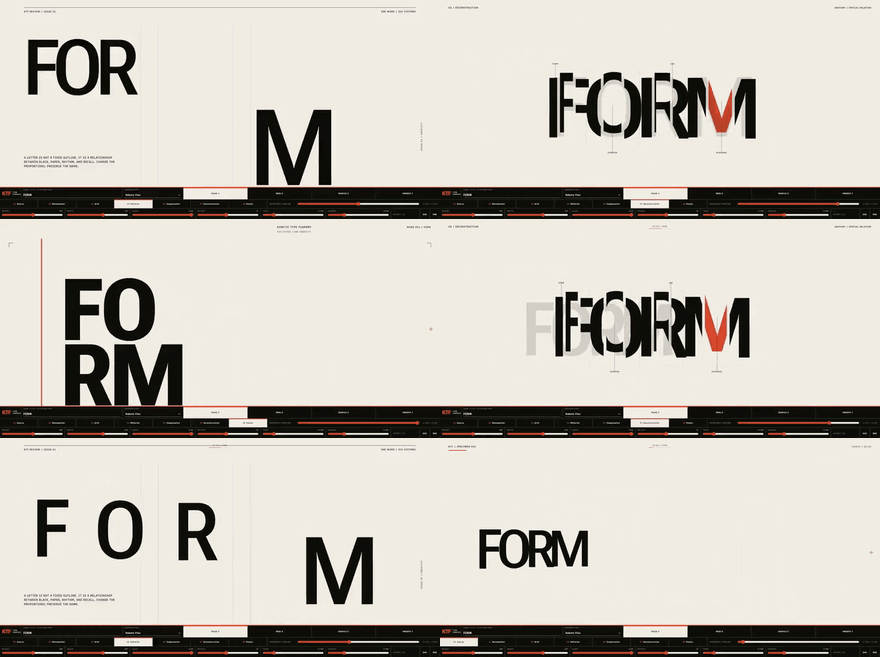
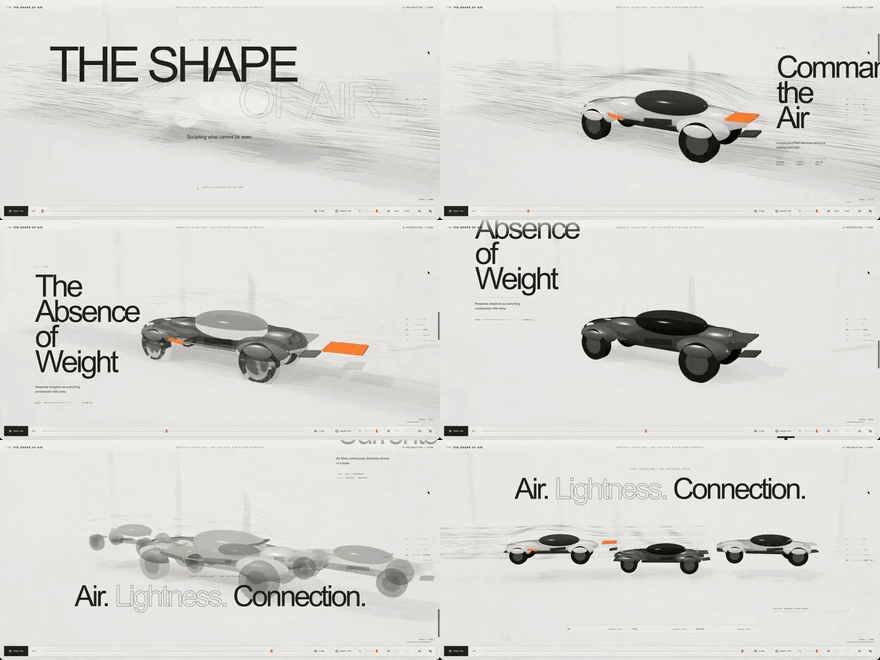
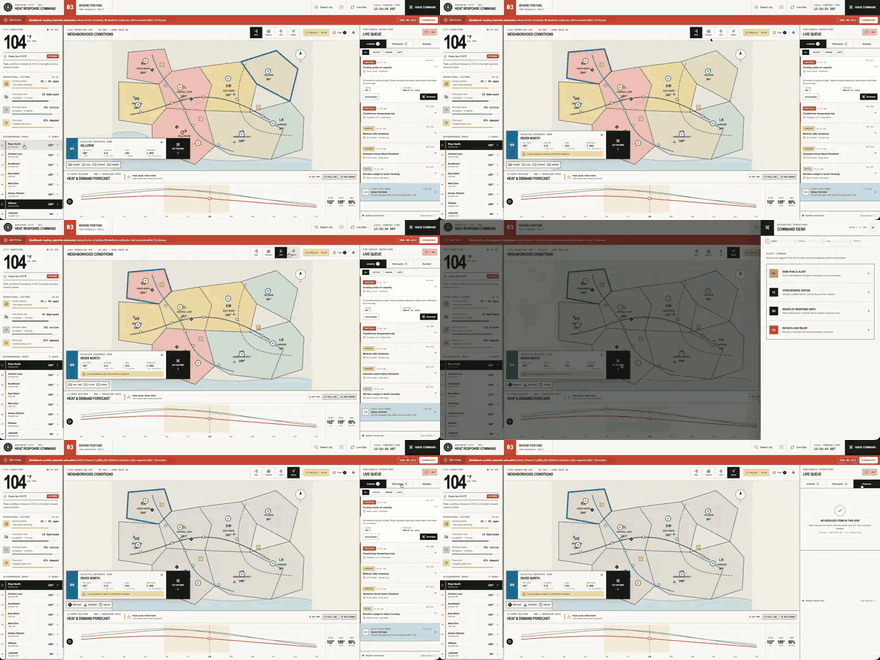
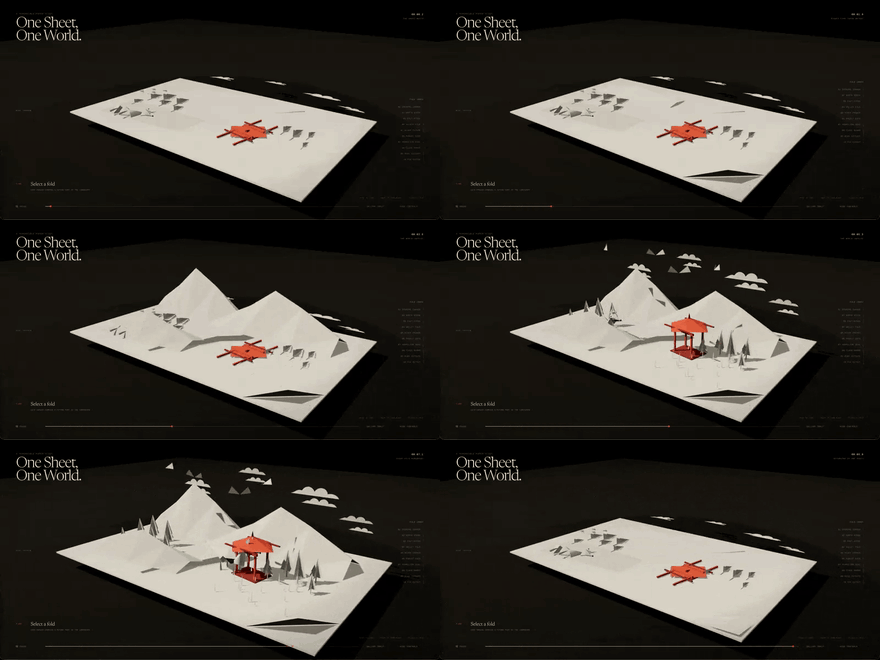
First, a few real examples. Derrick Choi, an OpenAI Codex engineer, brainstormed entirely by voice with Codex, then had GPT-5.6 Sol single-shot generate the whole page — producing 15 working websites/UIs. Here are 4 of them: