Princeton professor at ICML on AI and work: how should individuals adapt?
- Princeton CS professor Arvind Narayanan’s ICML 2026 keynote in Seoul, “What will be left for us to work on?”, builds on the “AI as Normal Technology” framework with Sayash Kapoor.
- SAGE lab: over ~24 months, frontier models jumped in capability; reliability (consistency / robustness / calibration / operational safety) rose only 5–10pp.
- In software’s decide–execute–deliver stack, AI mainly compresses execute (~1/3 of effort); decide and deliver are not compressed—and may expand.
- ATM, radiology, translation, software tools: automation rarely cuts jobs 1:1; software employment grew ~10,000× through many ~10× tool leaps.
- He splits RSI / human-level AI / economically transformative AI / superintelligence into four non-entailing dimensions.
- Personal adaptation: raise the ceiling, don’t only ride the floor; balance productivity / growth / control; refuse black boxes; master first, then amplify; reinvest ~10 hours/week into skills.
Two narratives: the AI field is anxious about its own jobs
At ICML 2026 in Seoul, Princeton CS professor Arvind Narayanan gave a keynote titled “What will be left for us to work on?”
He splits the path into two practical camps—not pure philosophy:
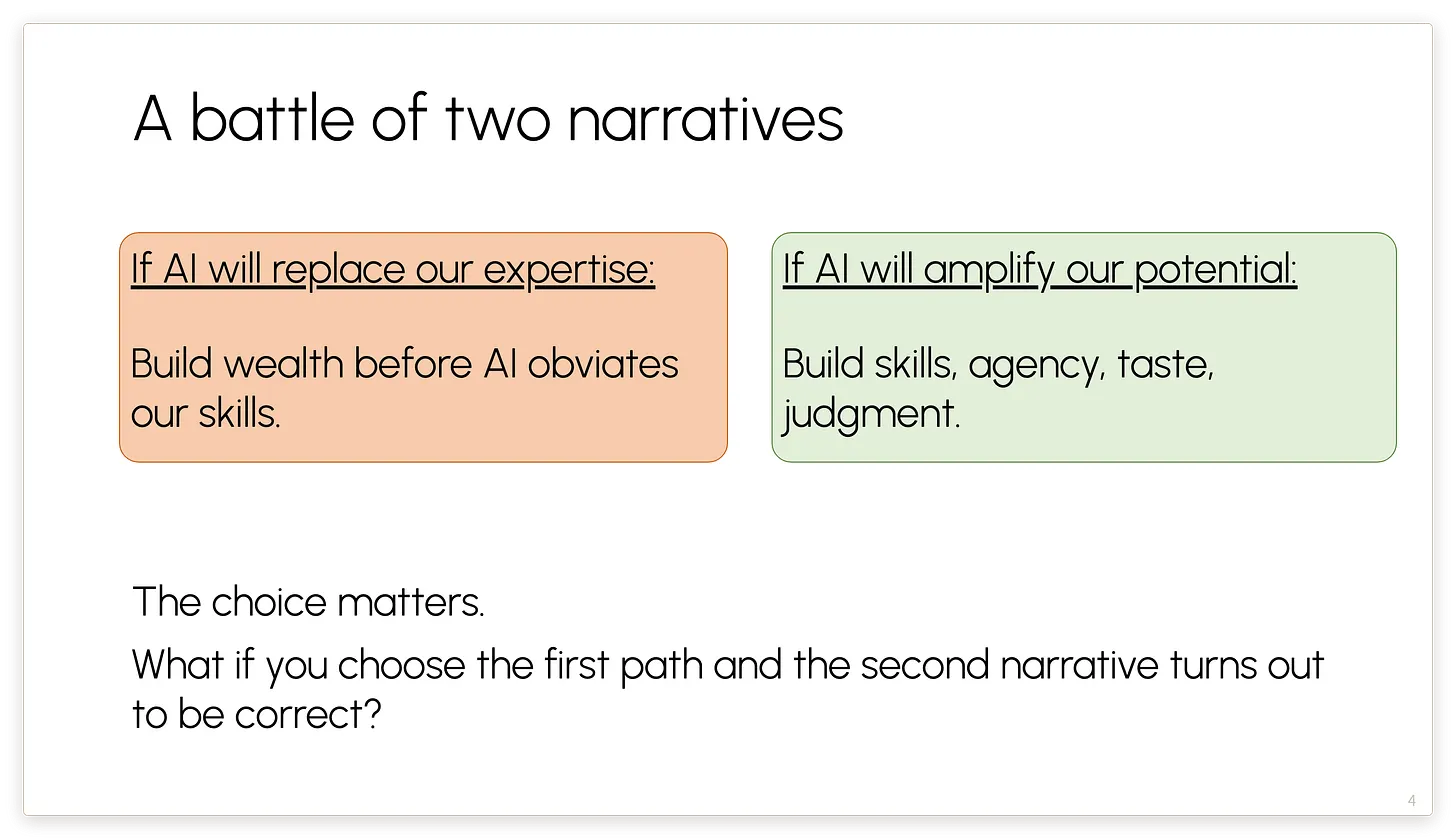
If you bet on replacement and amplification wins, you may miss the best window in history to build superpowers. The world is watching how the AI community responds; rolling over and accepting “AI will do the work” may fuel a sharper political backlash.
Four stages of AI impact—the slowest has barely begun
“Normal” in AI as Normal Technology does not mean AI is a hammer or a toothbrush. They treat it as industrial-revolution scale, as a causal model of how capability becomes economic and social impact.
Classic diffusion: invention → innovation (appliances) → adoption. They expand it into four stages, with software as the example:
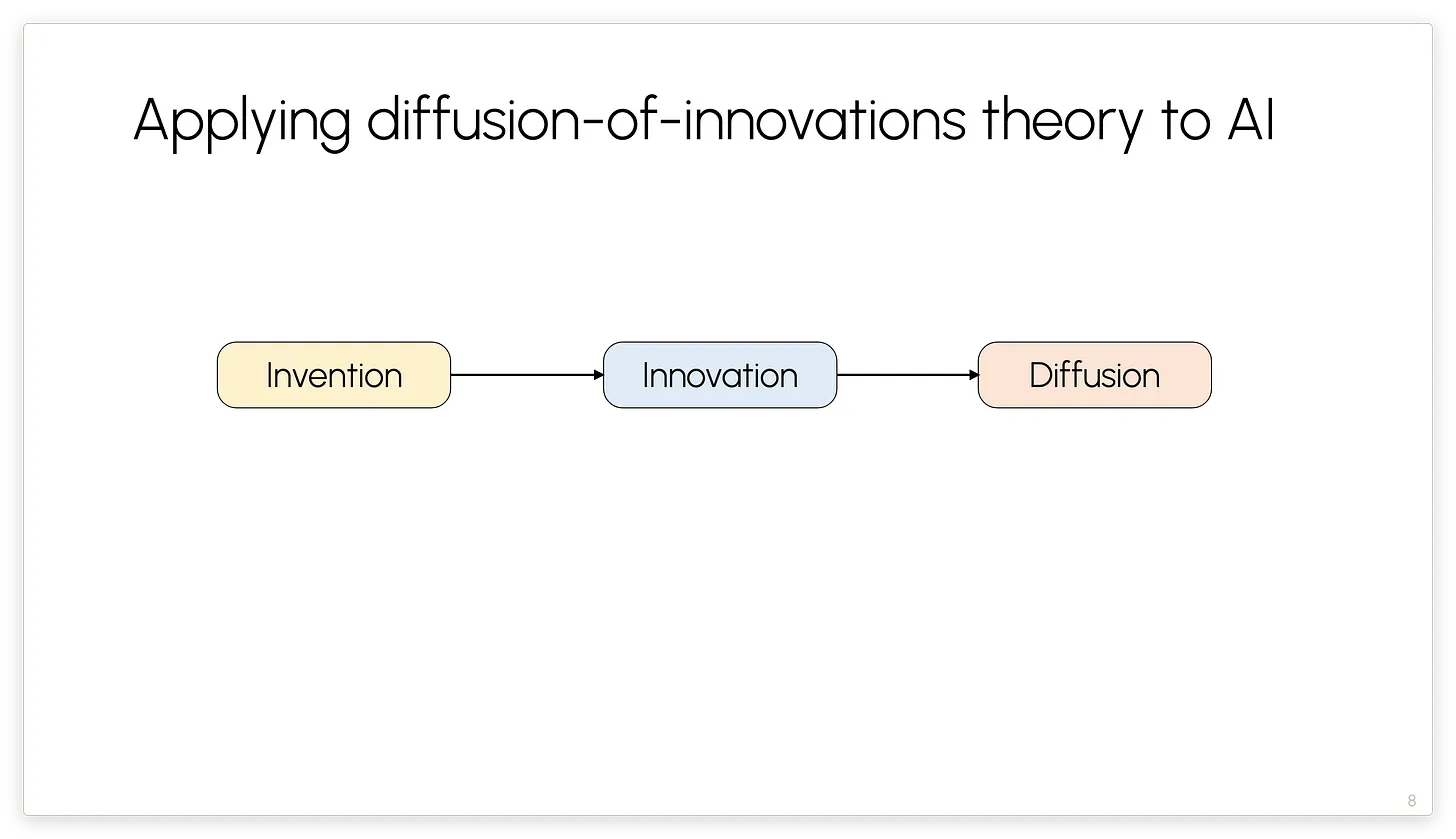
Stage four is slowest. Even in software—an early coding-agent adopter—true organizational redesign has barely started. Speculation: if agents can ship huge, secure codebases, one-size-fits-all software for billions makes less sense; software becomes extremely personalized, and even “software company” as a form may be renegotiated. That is human and organizational change—historically measured in decades.