AI Engineer Conference Closing Debate: Is the Hype Around Autonomous Coding Loops Outrunning Engineering Discipline?
- On the final day of the AI Engineer World's Fair, a live debate about "the loop" (an agent that writes code, runs tests, spots errors, and fixes them on its own, cycling over and over) put the argument running through the whole conference on the table: believers say there's no going back to writing code by hand, skeptics say the hype has outrun engineering discipline
- Anthropic's Head of Labs and Instagram co-founder Mike Krieger talked about the company's internal tool Claude Tag — the instruction given to it now is "you own this part of the codebase, watch the feedback channel yourself, and pick up work proactively," not "fix this one bug"
- Amplify's 2026 AI engineer survey: 95% of respondents already use agents (up from about half last year), and 89% of those let agents write data (up from 52% last year) — but 59% worry that AI-generated code is piling up long-term technical debt, and the "control layer" for agents is still primitive
- The closing keynotes turned optimistic: Theo Browne said "what used to count as a startup is now just a side project"; YC President and CEO Garry Tan said the fastest-growing founders treat AI as a workforce, not autocomplete
- The live vote fizzled out — the stage lights were so bright that neither the moderator nor the debaters could tell how many hands the audience had raised
On the Conference's Last Day, a Fight Broke Out Over "the Loop"
On the final day of the AI Engineer World's Fair (AIEWF), a live debate about "the loop" put the argument running through the whole conference out in the open. The loop is when an agent writes code, runs tests, spots errors, and fixes them itself — round after round — without a human watching every single step.
The debate was trying to settle one thing: can an autonomously running "software factory" actually be used at scale right now, or has engineering discipline simply not caught up with the ambition? Moderator Allie Howe put it bluntly at the outset: "Is there a gap between the hype around the loop and how usable it actually is?"
Arguing for the loop: Geoffrey Huntley, creator of Ralph Loop, joined by Keycard CEO Ian Livingstone. Arguing against: Dex Horthy of HumanLayer and Greg Pstrucha of Subroutine. Neither side denied the loop is useful — what they disagreed on was whether coding can be handed over to agents wholesale right now.
Hand a task list to an intern and let them try, fail, and try again on their own until it's done — instead of walking them through every step yourself. That's roughly what an agent's loop is: it runs on its own, and you just watch to make sure it doesn't go off the rails.
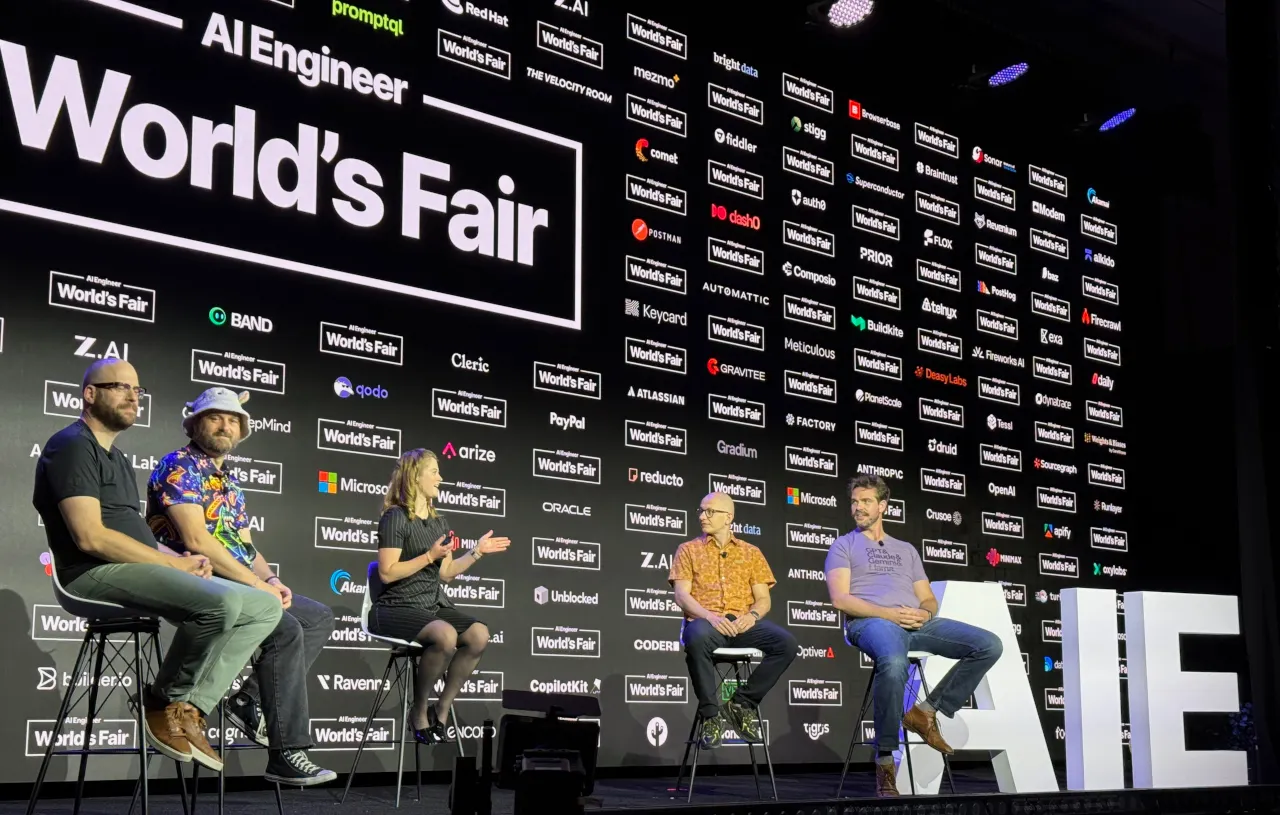
The Case For: the Loop Is Already Here, No Going Back
Huntley opened by saying the loop is already here. "It's inevitable, and it's here to stay." He added: "I don't think I'll ever go back to writing code by hand."
Livingstone picked up the thread and pushed it toward a harder point: what matters is whether you can verify the result. It doesn't matter how the code got written — human or agent — as long as the outcome is verifiable. He also pointed out that the loop is really the core of software development itself, not something new.
Livingstone's exact words: "The core of a loop is: I try something, I learn something, I apply it. What we're really talking about is just how much faster we can make that process go." In his view, agentic coding is just this ancient loop spinning faster.
The Case Against: the Hype Has Outrun Engineering Discipline
Horthy opened by drawing a clear line: he's not against the loop. "The basic question here isn't whether the loop is good or bad." He pointed out that Kubernetes itself is built on control loops — but those are deterministic loops. His real objection: "the hype has outrun the discipline."
So what does "deterministic" actually mean? Simply put, the rules are fixed in advance — if server load spikes, add a server; the exact adjustment is predetermined, no judgment call needed. An agent's loop is different: at every step, what to do next is decided on the fly by the AI, so running the same task twice can produce different processes and different results. The two loops look alike, but underneath they're completely different things.
Horthy pushed further on that distinction: what's called the "level of abstraction" simply means how high up a human is standing while managing the work — the higher the level, the fewer details a human handles, and the more gets handed to AI. His view: "I haven't seen evidence that we can raise the abstraction level right now" — meaning hand coding over to agents wholesale. "If anything is going to move, it should be moving down a level."
Pstrucha was worried about a different ledger: money. He said the economic sustainability of the agent loop is in question — you can't "buy your way out of orchestration problems with more tokens."
- The loop is already here — no going back to writing code by hand
- What matters is whether you can verify it, not how the code was produced
- The loop is already the core of software development: try something, learn something, apply it
- Not against the loop — Kubernetes has long been built on control loops, but those are deterministic
- The hype has outrun engineering discipline
- No evidence supports raising the abstraction level; if anything, it should move down a level
- Not economically sustainable — you can't buy your way out of orchestration problems with more tokens
"We're kind of the locomotive engineers now. That's our job — keep the train on the tracks."Geoffrey Huntley, in favor of the loop
The Software Factory's Dilemma: Once It's All Automated, Who Still Touches the Problem?
The conversation turned to the "software factory" — the metaphor, now popular across the industry, where the entire pipeline (writing code, testing, shipping) runs automatically through a fleet of agents, with humans stepping back into supervision and review.
Horthy's worry was concrete: once everything runs automatically inside a factory-style agent environment, "you never touch the problem itself." So he suggested starting small and iterating gradually with the agent loop, "building intuition" first rather than jumping straight to end-to-end full automation.
Even Huntley admitted there's danger in the loop. He said the software factory represents where things are headed, but the market hasn't solved it yet. "This is frontier thinking."
As the hour-long debate wrapped up, Howe asked the audience to raise their hands and vote on which side "won." What followed was a very human comedy of errors: the stage lights were so bright that neither she nor any of the debaters could tell how many hands were raised. Maybe they needed an agent to dim the lights.
Anthropic's Blueprint: What Claude Tag Actually Looks Like
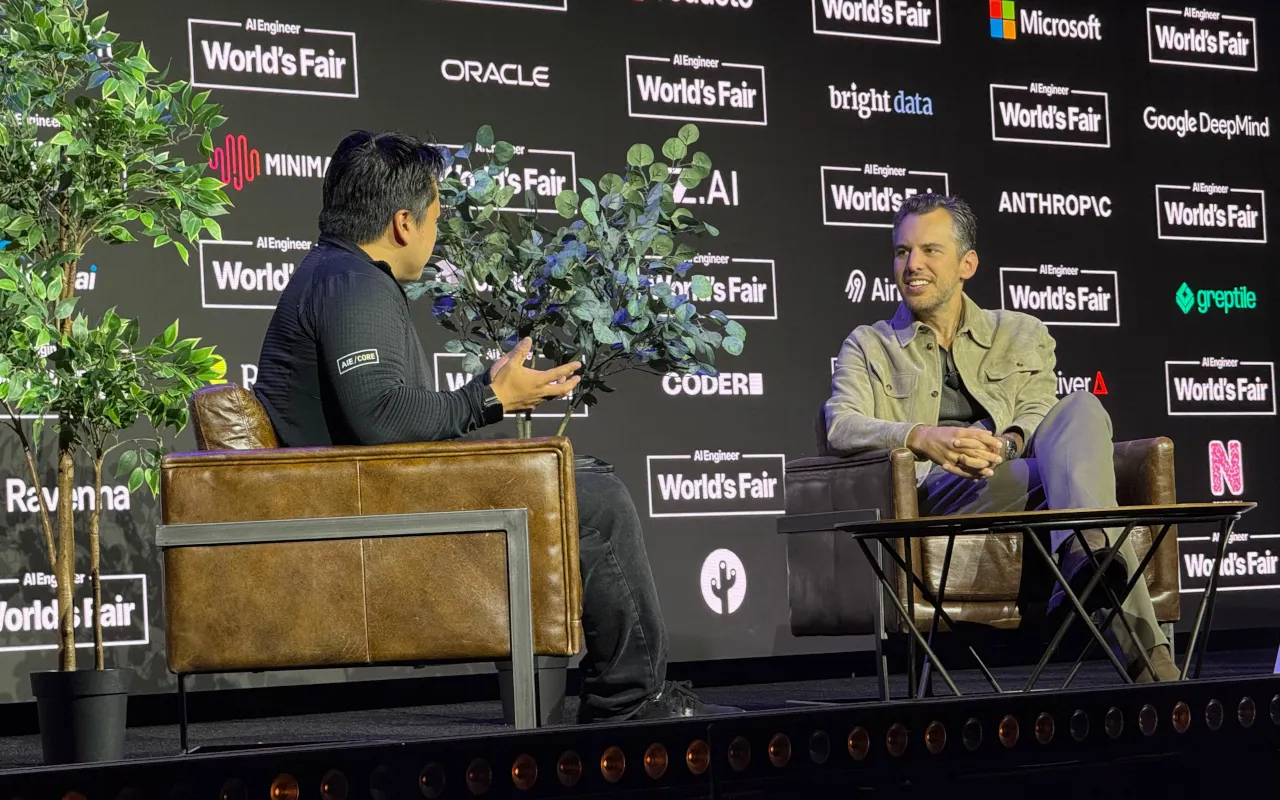
If you're looking for a company actually moving toward the software-factory model, Anthropic is one. Instagram co-founder and current Anthropic Head of Labs Mike Krieger sat down with swyx for an interview earlier that morning.
He talked about Claude Tag, the internal tool Anthropic announced publicly the week before. He described Tag as more "delegated, asynchronous, proactive" than Claude itself. This may well be what an early software factory actually looks like: not agents replacing entire teams, but multiple people delegating responsibilities to a system like Claude Tag.
Krieger only touched on it briefly on stage; the official announcement spells Claude Tag out in full: it puts Claude into Slack as a team member. Give it access to designated channels, connect it to tools and codebases, and anyone in the channel can @Claude to hand off work and go do something else; it remembers relevant context from the channel and can even plan out future tasks. Anthropic positions it as the next evolution of Claude Code — making the model more proactive and better suited for teams to use together.
Compared to opening a one-off chat window to ask Claude for something, @Claude differs in four ways:
Anthropic says 65% of the code produced by its product team is now generated by its internal version of Claude Tag (a vendor self-reported figure), and this way of working is spreading from engineering into tracking product metrics, handling support tickets, and chasing down tricky bugs. On the control side, admins can carve out isolated "Claude identities" per channel: the memory and tools used by the sales identity don't leak into the engineering one; admins can also set token-spend caps and pull a complete log of who asked @Claude to do what, and when. It's currently in beta for Claude Enterprise / Team customers, running on Opus 4.8, and replaces the original Claude-in-Slack app.
"Most of how we use it is really more like delegation," Krieger said. He gave an example: "Don't just fix this bug. From now on, you own this part of the codebase — I want you watching this feedback channel and picking up work proactively." He said this has already changed how the team operates, turning it into a "multiplayer, asynchronous, proactive" way of collaborating.
But he also flagged a side effect of automation: the team is now "bottlenecked at review," as well as bottlenecked on "whether people can fully wrap their heads around what we're actually doing."
The Numbers Speak: the 2026 AI Engineer Survey
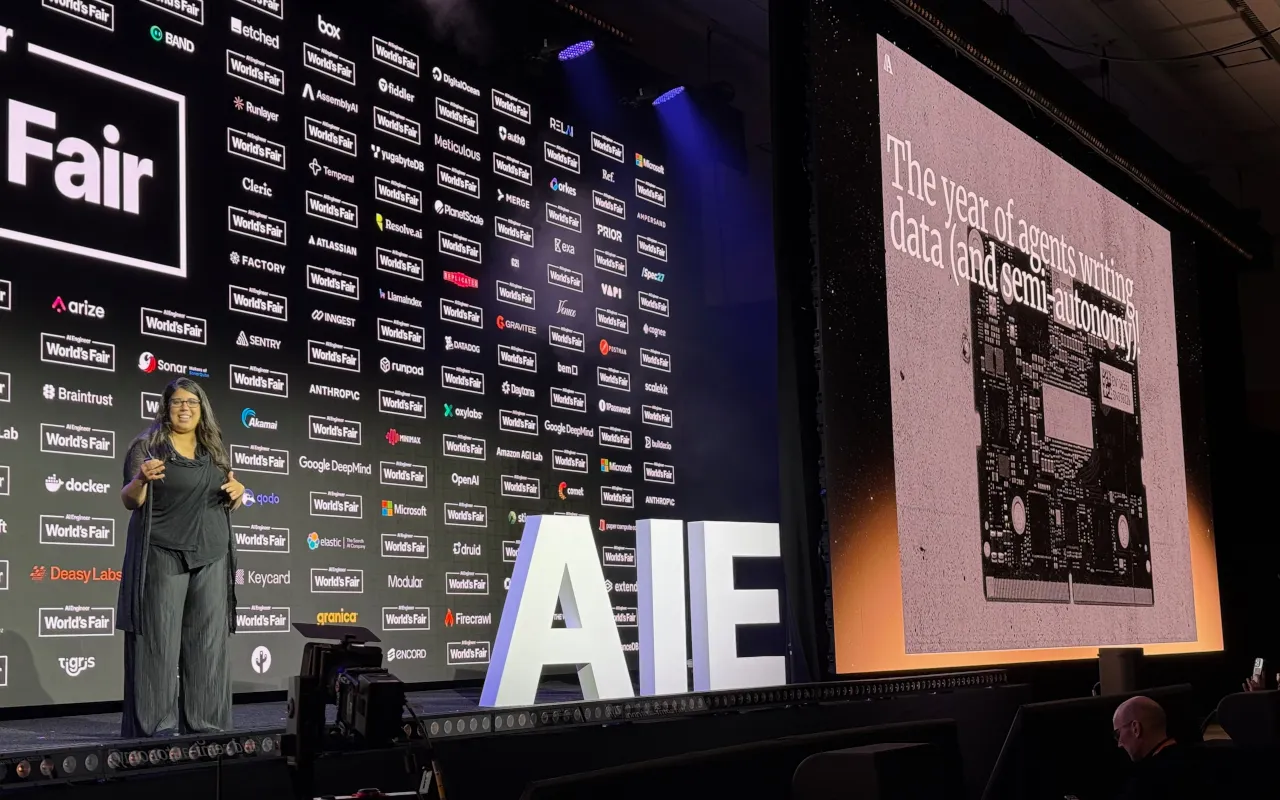
Back to the day-to-day reality of most AI engineers. That same morning, Amplify's Barr Yaron presented her annual industry survey.
Per Amplify's data, 95% of respondents now use agents — roughly double last year's figure. Among teams using agents, 89% said their agents can write data, up from 52% last year. "Agents aren't just reading, summarizing, and drafting anymore," Yaron said. "They're genuinely taking action inside systems."
But the controls are still fairly primitive. Human approval and permissions are the two main safeguards, backed by a scattered mix of techniques: task decomposition, retrieval, memory, sandboxing. "Nobody has settled on a control layer for agents," Yaron said. In plain terms: agents can already act inside systems, but the industry hasn't figured out how to put a leash on them.
Cheaper, and More Anxious: Cost and Technical Debt
Cost is also a sore spot. 40% of respondents said AI costs "often" limit how ambitious they can be with AI, and another 36% said "sometimes." Token usage is now the second-most-tracked production metric, right behind quality.
AI makes experimentation cheaper and lets teams ship more software — but 59% of that same group of respondents worry that the code AI generates today is creating long-term debt. The time and money saved may be getting eaten right back up by the debt piling up underneath. That contrast says more, plainly, than anything said on the debate stage.
Closing Keynotes: What Comes Next
The conference's final sessions pulled the mood back toward optimism — toward looking at AI and using it to build things. That is, after all, what AIEWF is for, and where the fun part lives.
Theo Browne walked through several projects he'd built, or was still building, with AI. His point: the scale a single developer can realistically tackle has changed. "What used to count as a startup is now just a side project," he said. And projects he used to write off as "too big" are now within reach.
YC President and CEO Garry Tan followed by bringing that optimism down to the organizational level. He said the fastest-growing founders at YC all treat AI as a workforce to be deployed. Where most people used to treat it, at best, as autocomplete — a couple of lines popping up while typing — this group hands it whole chunks of work to own.
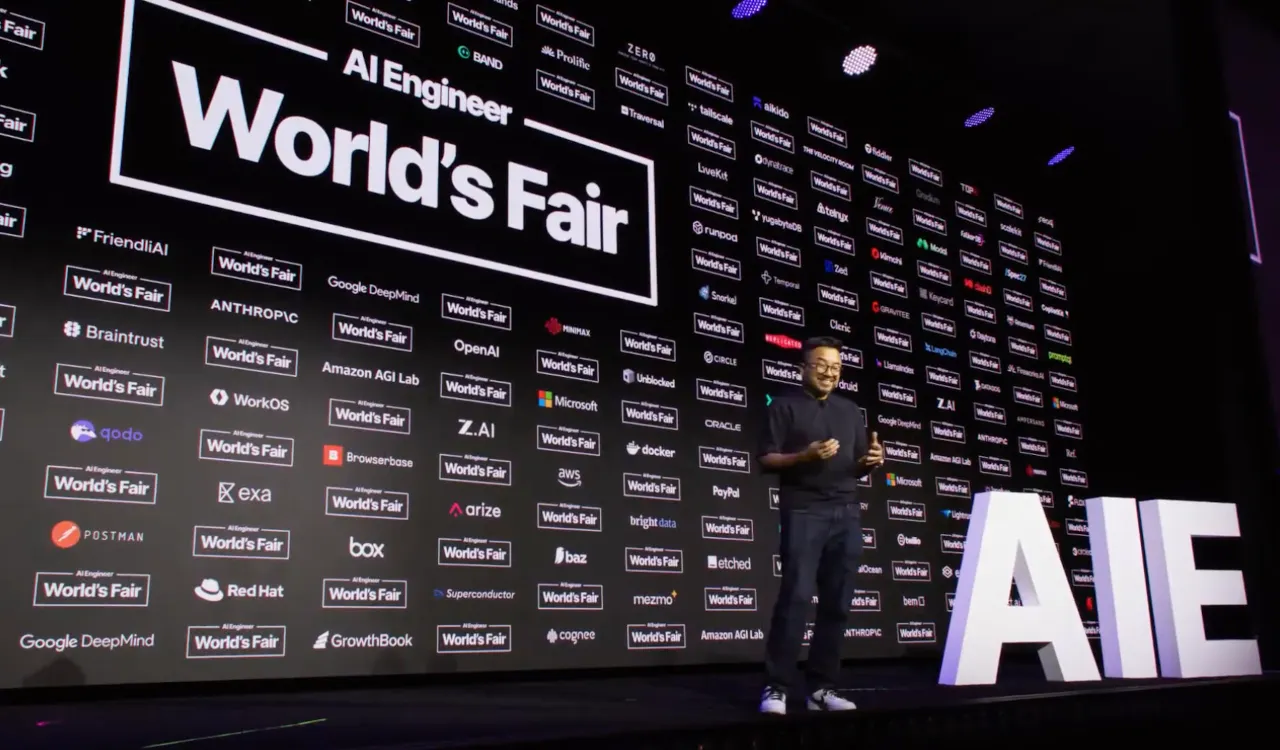
Back to the locomotive metaphor from the opening: a week of debate made clear how much engineering still stands between today and an AI-native vision landing for everyone. And the closing keynotes reminded the engineers in the room why they showed up in the first place. In their own words, they just want to drive these trains.
"Build an AI-native company — not just a company that happens to use AI."Garry Tan, President and CEO of YC, closing keynote